Sri Lanka Packing List

Sri Lanka is hot and humid on the coast all year, while the hill country gets cool at night. Pack light clothes, one warm layer and a light rain jacket for the monsoon showers.

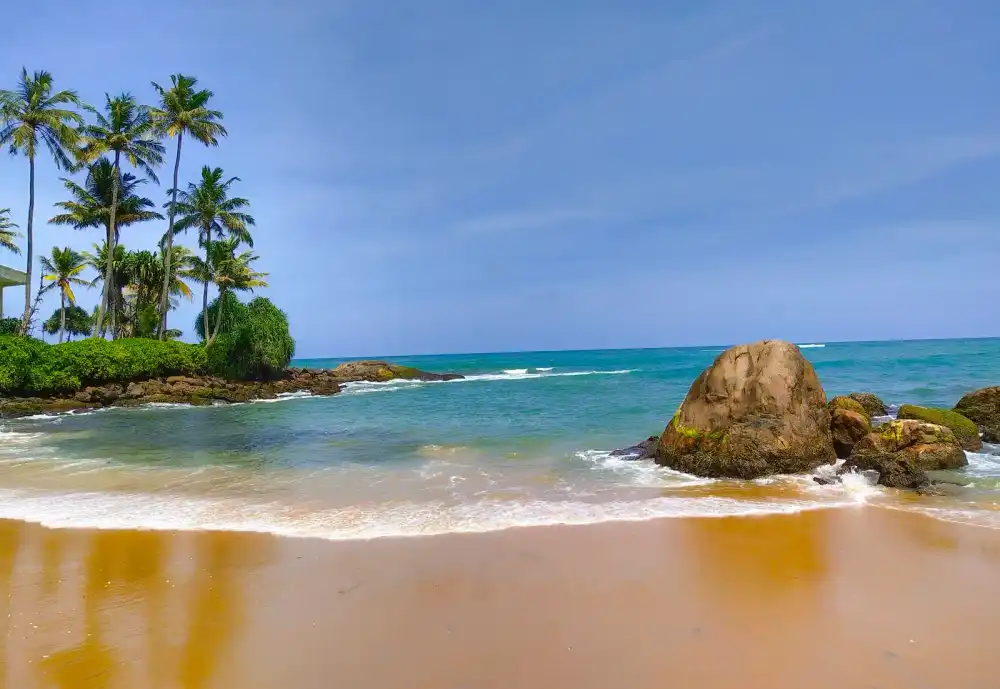
Landscape in Sri Lanka
0 / 38 packed
Documents & money 0 / 5
  • ?

    Check that it's valid for your whole trip. Some countries also require it to be valid for several months after you leave, so check the rules for your destination.

  • ?

    Keep the policy number and the emergency phone number on your phone and on paper, so you can find them even without signal.

  • ?

    Check that your card works abroad and what your bank charges for payments and cash withdrawals in other currencies.

Clothing 0 / 12
  • ?

    Bring it even if you're not planning a beach day, because many hotels have a pool or spa.

Footwear 0 / 2
Electronics 0 / 3
  • ?

    Check which plug type your destination uses. A universal adapter with USB ports works in most countries.

  • ?

    Keep it in your hand luggage, because most airlines don't allow power banks in checked luggage.

Toiletries 0 / 6
Health 0 / 5
Bags & travel gear 0 / 5
  • ?

    Keeps your phone, passport and money dry on boats, at waterfalls and on the beach.

What to wear in Sri Lanka

On the coast it’s hot and humid all year, so shorts, light shirts and swimwear are what you’ll wear most. Inland, Kandy, Anuradhapura, Polonnaruwa and Dambulla have many temples and sacred sites, and you have to cover your shoulders and knees at all of them. So light trousers or a long skirt with a loose shirt are useful, because you can visit a temple without changing first.

You also take off your shoes and hat at temples, and the stone gets very hot by midday, so it’s easier to go early or late. Don’t pose for photos with your back to a Buddha statue, because it’s considered disrespectful.

When is the monsoon in Sri Lanka?

Sri Lanka has two monsoons that bring rain to different parts of the island at different times. So whichever month you go, one side of the island usually has better weather than the other.

Southwest monsoon

  • Roughly May to September
  • Rain on the west and south coasts and in the hill country
  • The east coast, around Trincomalee and Arugam Bay, has its best weather

Northeast monsoon

  • Roughly December to February
  • Rain in the north and east
  • The south coast is dry and sunny

October and November can bring heavy afternoon storms almost anywhere. Showers also come quickly in the dry season, so a light rain jacket and a dry bag for your phone are useful all year.

Hill country, rainforest and safari

Nuwara Eliya sits at nearly 1,900 m, and nights there and at Horton Plains can drop to around 10°C. Ella is milder but still cool after dark. So bring one fleece or warm jumper, because the rest of the list is made for the heat.

  • Long trousers and socks: tucking your trousers into your socks helps against leeches on wet trails at Sinharaja and the Knuckles. Leech socks are also sold locally.
  • Neutral clothing: khaki, green and brown work better than white or bright colours on safari at Yala or Udawalawe.

What not to pack for Sri Lanka

  • Jeans: they’re heavy and too warm, and they take a long time to dry in the humidity.
  • Hard-shell suitcase: you’ll squeeze your bag into tuk-tuks and onto train racks, so a soft bag is much easier.

Questions about packing for Sri Lanka

When is monsoon season in Sri Lanka?

Sri Lanka has two monsoons. The southwest monsoon brings rain to the west and south coasts and the hill country from about May to September, and the northeast monsoon brings rain to the north and east from about December to February. So when one coast is wet, the other is usually dry.

What should I wear at temples in Sri Lanka?

You have to cover your shoulders and knees, and you take off your shoes and hat before you go in. Light or white clothes are traditional at Buddhist temples, and a sarong or scarf lets you cover up if you're wearing shorts.

Do I need a travel adapter for Sri Lanka?

You need one if you're coming from Europe, the US or Australia. Sockets in Sri Lanka are a mix of UK-style Type G and round three-pin Type D and M, sometimes in the same room, so even if you're coming from the UK a universal adapter is useful. The voltage is 230V.