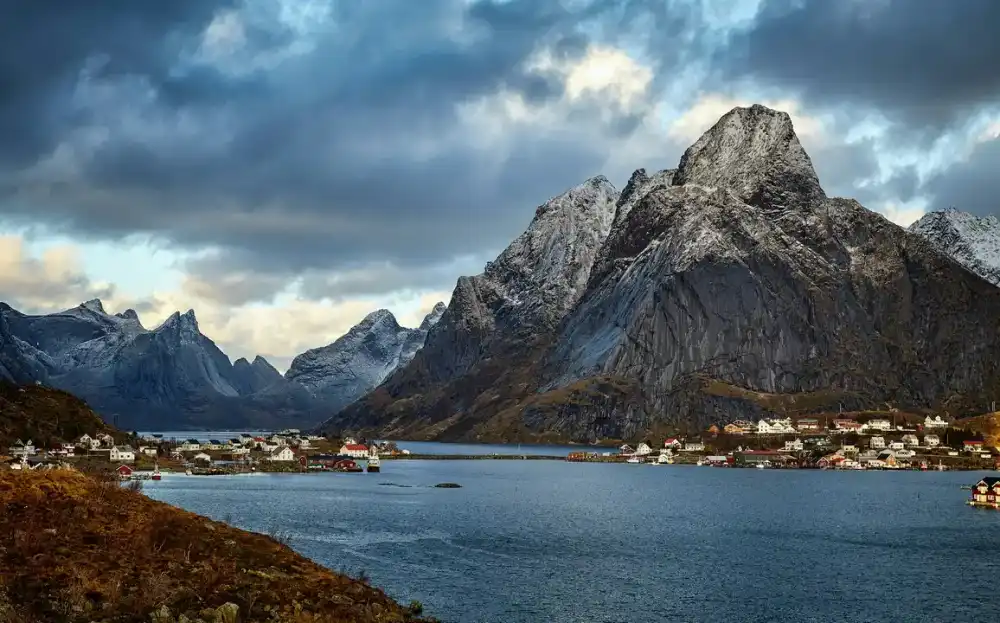
What to wear in Norway
The west coast of Norway, where most of the fjords are, gets rain in every season, and Bergen is one of the wettest cities in Europe. So a hooded waterproof jacket and waterproof trousers are more useful than a heavy coat. Under them, a base layer and a fleece let you adjust as you go from a sheltered fjord to a windy ridge.
Keep cotton for the evenings, because jeans that get soaked on a ferry deck won’t be dry by the next morning. Wool socks are also worth packing, because they stay warm even when your boots get wet.
Norway in winter and summer
Winter
- Dark and cold, with pavements in Oslo, Bergen and Tromsø often icy
- Above the Arctic Circle, in places like Tromsø, the sun doesn’t rise for several weeks around Christmas
- Add an insulated jacket, grips for your boots and hand warmers
Summer
- Mild and very light, and in the north the sun doesn’t set for weeks around midsummer
- Mosquitoes in the north and around lakes and forests
- Add sunscreen, sunglasses, insect repellent and a sleep mask
The winter list and the summer list add these items to the basics, so pick the one for the month you’re going.
Hiking in Norway
Norway’s right to roam means you can walk across most uncultivated land, and popular hikes like Trolltunga and Preikestolen are long, steep and rocky. That’s why you need proper hiking boots rather than trainers. Mountain weather can change quickly, even after a clear morning, so put the fleece and the waterproofs in your daypack every time you go out.
If you’re hiking outside the winter months, bring swimwear as well. A quick swim in a cold fjord or lake is a normal part of a summer hike, and in Oslo you can also use the floating saunas in the harbour.
What not to pack for Norway
- Smart clothes: Norwegians dress casually, even in good restaurants, and outdoor clothing is normal everywhere.
- Umbrella: it’s hard to use on a ferry deck or a windy mountain path, so a hood works better.
- Heavy coat: a fleece under a waterproof jacket handles rain and wind better and is easier to adjust.
- Bottled water: the tap water is safe to drink, so you can refill your bottle instead.